Many manufacturers assume any nitrogen generator can support laser cutting but laser cutting places distinctive demands on gas supply that affect quality, productivity and operating costs.
To keep laser cutting operations running efficiently, it must consistently supply the right purity, pressure, and flow while ensuring adequate storage capacity throughout every production shift. If any one of these elements falls short, manufacturers may experience inconsistent cutting quality, reduced throughput, unnecessary downtime, or increased operating costs
As more fabrications shops transition to on-site nitrogen generation, understanding the differences between a purpose-built laser cutting solution and a general-purpose nitrogen generator has never been more important.
What laser cutting demands from a nitrogen system
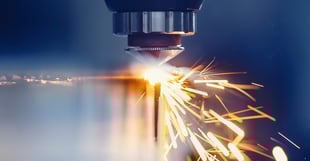
Compared to many industrial nitrogen applications, laser cutting typically requires high nitrogen flow rates and a reliable, uninterrupted gas supply. During production, nitrogen acts as an assist gas that helps remove molten material from the cut while protecting the workpiece from oxidation. As a result, even brief interruptions or fluctuations in nitrogen purity, pressure, or flow can affect productivity and finished part quality.
Purity plays a critical role in cut quality. High-purity nitrogen helps produce clean, oxidation-free edges, reducing or eliminating the need for secondary finishing while supporting consistent product quality. At the same time, stable pressure and flow are essential for maintaining cutting performance, particularly during peak production periods or when multiple lasers are operating simultaneously. Without a properly sized and engineered system, fluctuations in supply can slow production and increase the risk of scrap and rework.
Ultimately, a nitrogen system designed specifically for laser cutting is essential for reliable performance. The best systems do more than meet peak demand. They consistently deliver the purity, pressure, and flow required to support uninterrupted production, maximize productivity, and maintain high-quality results.
Why pressure, purity, and flow must work together
When evaluating nitrogen generation systems, many buyers focus primarily on purity. While purity is important, it represents only one part of overall system performance.
Effective laser cutting depends on balancing three critical factors: purity, pressure, and flow.
Nitrogen purity contributes to clean, oxidation-free cuts while helping minimize discoloration and reducing the need for additional finishing processes. However, even the highest purity of nitrogen cannot compensate for inconsistent fluctuations in pressure and flow.
Modern fiber laser cutting systems rely on high-pressure nitrogen to efficiently remove molten material from the cutting zone while maintaining cutting speed, precision, and edge quality. When pressure fluctuates, cut quality can suffer and production consistency may be compromised.
Maintaining that performance also requires adequate flow. A stable flow rate ensures the laser receives the volume of nitrogen required throughout the entire cutting cycle, particularly during periods of peak demand. When flow is insufficient, pressure can drop, leading to inconsistent cutting performance, reduced productivity, and potential production interruptions.
Rather than focusing on a single performance characteristic, manufacturers should evaluate how a nitrogen generation system balances purity, pressure, and flow as an integrated solution. Reliable laser cutting performance depends on all three working together to support consistent production, cut quality, and productivity.
Why storage is just as important as generation
Many manufacturers focus on nitrogen generation capacity alone, but generation is only one component of a reliable supply system. Storage plays a vital role in maintaining stable performance and supporting fluctuations in demand.
Laser cutting applications often experience varying nitrogen demand depending on material thickness, cutting schedules, and production volume. During periods of peak consumption, demand can temporarily exceed the generators’ instantaneous output.
High-pressure storage acts as a buffer, allowing the system to respond to these changing production requirements without interruption cutting operations. By storing nitrogen under pressure, manufacturers can maintain a consistent supply even during periods of increased demand. Proper storage also helps minimize pressure fluctuations that could otherwise affect cut quality or reduce machine productivity. Instead of viewing storage as an optional accessory, it should be considered an essential part of the complete nitrogen generation system.
Ultimately, storage is not just a backup for peak demand; it is a critical component that helps ensure the nitrogen supply remains stable. By combining generation, boosting, and storage, manufacturers can create a more resilient nitrogen supply system that supports stable laser performance under real-world production conditions.
Don’t overlook filtration
Filtration may not receive as much attention as pressure or purity, but it plays an important role in maintaining overall system performance.
Effective filtration helps protect downstream equipment by removing contaminants that could affect gas quality or interfere with system operation. Clean, properly filtrated air supports the nitrogen generation process while helping maintain consistent output over time.
Filtration also contributes to long term equipment reliability by reducing contamination that may increase maintenance requirements or shorten component life. Filters also protect the laser head, which can be a huge cost to replace if damaged.
While filtration often operates behind the scenes, it supports the dependable performance manufacturers expect from a nitrogen generation system designed for continuous laser cutting operations.
While filtration often operates behind the scenes, it supports the dependable performance manufacturers expect from a nitrogen generation system designed for continuous laser cutting operations.
Why integrated systems are replacing pieced-together installations
Historically, many fabrication shops assembled nitrogen generation systems using components from multiple suppliers. While this approach can work, it often introduces unnecessary complexity.
Some manufacturers also rely on bulk nitrogen supplied by gas companies. While delivered nitrogen can provide a straightforward source of supply, it comes with ongoing delivery schedules, storage requirements, and exposure to changing gas costs. For fabrication operations with consistent or growing nitrogen demand, generating nitrogen on-site can provide greater control over supply while reducing dependence on scheduled deliveries and bulk storage.
On-site nitrogen generation allows manufacturers to produce nitrogen when and where they need it, helping create a more reliable and predictable supply. It can also eliminate the need to manage nitrogen deliveries and large storage vessels, freeing up valuable floor space and simplifying day-to-day operations.
However, building an on-site system from individual components can introduce its own challenges. Managing separate nitrogen generators, boosters, storage vessels, filtration equipment, pressure controls, and monitoring systems frequently requires additional engineering, installation time, and floor space. It can also create compatibility concerns between components from different manufacturers.
From a service perspective, troubleshooting becomes more complicated when multiple vendors are responsible for different parts of the system. Routine maintenance may require coordination with several suppliers, increasing both downtime and administrative effort.
That’s where a complete, integrated on-site nitrogen solution can make a difference. Rather than managing individual components or relying solely on delivered nitrogen, manufacturers can work with a single partner for the complete system, from nitrogen generation and compression to filtration, pressure control, and monitoring.
An integrated solution simplifies installation, reduces system complexity and footprint requirements, and provides a more streamlined ownership experience. With the complete on-site solution available from Atlas Copco, fabrication shops can simplify their nitrogen supply while gaining greater control over reliability, efficiency, and long-term operating costs.
How Atlas Copco LC N2 was built specifically for laser cutting
The LC N2 was designed specifically to address the unique requirements of laser cutting rather than serving as a general-purpose nitrogen generator.
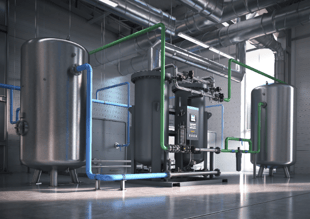
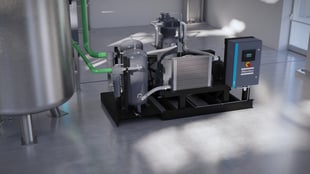
Instead of requiring manufacturers to assemble multiple pieces of equipment or buy from gas companies, the LC N2 combines nitrogen generation, a 300-bar high-pressure booster, high-pressure storage, filtration, pressure regulation, and control system into one integrated solution.
Its compact footprint makes it well suited for fabrication shops were available is limited, while its plug and play design simplifies installation and startup compared to more complex multi-component systems.
The product also offers remote monitoring capabilities, providing operators with greater visibility in system performance and helping support a more proactive operation. As production requirements increase, its modular design allows capacity to grow alongside the needs of the business.
By integrating every important component into a single, purpose-built platform, the LC N2 is designed to deliver pressure, purity, and storage through a system designed specifically for the application.
Conclusion
Laser cutting requires far more than simply nitrogen. Achieving consistent cut quality and reliable production depends on delivering the right combination of purity, pressure, flow, and storage through a system designed specifically for the application.
As fabrication shops continue looking over ways to reduce operating costs, improve reliability, and gain greater control over their nitrogen supply, purpose-built nitrogen generation systems are becoming the preferred choice.
The Atlas Copco LC N2 brings these essential capabilities together in one compact, integrated solution, combining nitrogen generation, boosting, storage, filtration, and an all-in-one controller to help manufacturers support efficient, high-quality laser cutting while simplifying day-to-day operations.
Frequently asked questions



 5 min
5 min