

Why is hydrogen difficult to compress?
December 5, 2024
 5 min
5 min

Production environments today face mounting pressure to deliver cleaner, faster, and more reliable output. Whether you’re operating high‑precision laser cutting systems, PET bottle blowing lines, pressure‑testing equipment, or food‑grade packaging processes, the demand for consistent performance continues to rise. At the heart of this push for efficiency is one essential factor: the ability to generate high‑pressure, high‑purity air and gas without interruption.
Modern high‑pressure compression technology has become a catalyst for transforming industrial productivity. By ensuring stable pressure, absolute purity, and continuous uptime, it enables manufacturers to achieve levels of efficiency that older systems simply can’t match.
Many production lines struggle with familiar obstacles that quietly erode efficiency. Pressure fluctuations slow down cycle times and compromise precision. Contamination risks threaten product quality and can lead to costly rework or scrapped batches. Downtime, whether from maintenance, overheating, or equipment limitations, interrupts output and drives up operational costs. And in industries where purity is essential, even trace amounts of oil can jeopardize compliance and damage downstream equipment.
These challenges are especially pronounced in applications like laser cutting, where pressure consistency directly affects cut quality, or PET blowing, where insufficient pressure leads to uneven bottle clarity and shape. Traditional compressors often fall short when both high pressure and high purity are required simultaneously.
|
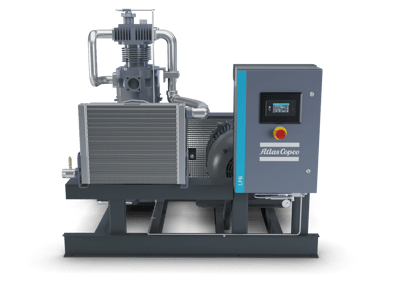
Atlas Copco’s LFB high‑pressure oil‑free piston booster was engineered specifically to overcome these challenges. Designed for demanding air and nitrogen applications, it delivers the combination of pressure, purity, and reliability that modern production environments depend on. Capable of reaching pressures up to 600 psig, the LFB provides the performance needed for advanced industrial processes while maintaining a 100% oil‑free output that protects product integrity.
Its air‑cooled design simplifies installation and reduces operating costs, while its true 24/7 duty cycle ensures continuous operation without performance degradation. Extended service intervals further reduce downtime, making the LFB not just a booster but a long‑term productivity asset.
The LFB’s construction reflects a commitment to durability and longevity. Its cast‑iron and steel components withstand demanding operating conditions, while stainless steel valves and a pressure‑lubricated crankcase help minimize wear and extend the life of critical parts. Maintenance intervals stretch as far as 8,000 to 16,000 hours, allowing production lines to run longer between service interruptions.
A fully automatic control system integrates seamlessly into existing setups, and enclosure options such as NEMA 4/12 and 4X ensure reliable performance even in harsh industrial environments. Every element of the design is focused on maximizing uptime and reducing the total cost of ownership.
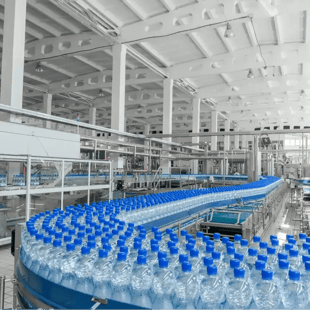
High‑pressure, oil‑free compression has a direct and measurable impact on production efficiency across multiple industries. In laser cutting, higher nitrogen pressure enables faster cutting speeds and produces cleaner, sharper edges that require less post‑processing. PET bottle blowing benefits from consistent high‑pressure air that improves bottle clarity, ensures uniform wall thickness, and reduces reject rates.
Pressure‑testing applications gain from precise, stable pressure control that shortens cycle times and improves accuracy. In food and beverage packaging, the purity of oil‑free air eliminates contamination risks and supports compliance with strict industry standards. Across all these applications, the result is higher throughput, improved product quality, and lower operating costs.
Oil contamination is more than a nuisance, it can compromise product integrity, damage sensitive equipment, and lead to regulatory violations. A 100% oil‑free booster eliminates these risks entirely. By removing the need for complex filtration systems and reducing the likelihood of downstream contamination, oil‑free technology supports cleaner production and longer equipment life.
Downtime is one of the most expensive challenges in any production environment. The LFB booster is designed to minimize it through continuous 24/7 operation, an air‑cooled system that eliminates the need for complex cooling infrastructure, and extended service intervals that reduce maintenance frequency. Optional upgrades such as duplexing, cold‑weather packages, and Modbus connectivity further enhance reliability and adaptability.
When your production line can’t afford to stop, your compression system must be equally dependable. The LFB delivers that level of performance.
The LFB booster is ideally suited for industries that rely on high pressure, high purity, and consistent uptime. Laser cutting operations benefit from improved cutting quality and speed. PET bottle blowing lines achieve better clarity and uniformity. Industrial testing environments gain precision and efficiency. Food and beverage packaging operations maintain purity and compliance. Any process that depends on clean, high‑pressure air or gas stands to gain significantly from this technology.
Efficiency is no longer just about speed, it’s about consistency, purity, and reliability. High‑pressure compression technology like the LFB Oil‑Free Booster empowers manufacturers to increase throughput, improve product quality, reduce downtime, and lower long‑term operating costs. In a competitive industrial landscape, the right compression system doesn’t just support your production, it transforms it.




.jpg?width=310&name=ZP%20Blog%20image%20(855%20x%20570%20px).jpg)