When production demand increases, adding compressed air capacity can become a much bigger project than simply purchasing another compressor.
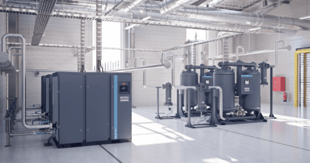
A traditional compressor installation may require dedicated indoor space, construction, electrical work, ventilation, piping, permitting and coordination between multiple contractors and equipment suppliers. For facilities operating under tight timelines or sites where indoor space is already at a premium, that process can add months of planning, expense and complexity.
But what if the compressor room could arrive already built?
Atlas Copco’s Containerized Compressor Room, also known as the AIRCUBE, provides a turnkey approach to adding compressed air capacity. The system is housed in a custom enclosure and arrives pre-wired, pre-piped and pre-assembled, allowing facilities to place the unit, connect power and air, and put it into operation.
For manufacturers looking to expand capacity without building a new compressor room, containerized compressed air can provide a faster, more flexible alternative.
Why adding compressed air capacity can become a construction project
Increasing compressed air capacity traditionally means finding space inside an existing facility or constructing a dedicated compressor room. Both options come with potential complications.
Indoor space may already be occupied by production equipment, inventory or other critical utilities. Building a new room requires additional planning and construction, while modifications to an existing space can disrupt operations.
There can also be permitting, electrical, ventilation and installation requirements to consider before a new compressor can begin producing air.
For facilities facing an urgent capacity requirement, the timeline can become a problem.
A containerized compressor room changes the equation by moving much of the engineering and assembly work away from the job site. Instead of constructing a compressor room around the equipment, the compressor room is delivered as a complete package.
Compressed air capacity in weeks, not months
One of the biggest advantages of a containerized solution is deployment speed.
The Atlas Copco Containerized Compressor Room is factory-built, pre-wired and pre-piped before it arrives at the customer site. This reduces the amount of site construction and installation required compared with building a conventional compressor room from the ground up.
The basic concept is straightforward:
Drop. Connect. Run.
Once the container is positioned and the required connections are made, the system can begin supporting production without the facility having to build an entire room around the compressors.
For manufacturers facing production expansion, new equipment installations or temporary capacity requirements, shortening the installation timeline can be just as valuable as increasing compressor capacity itself.
Reduce total installation cost, not just equipment cost
When evaluating a compressed air project, the purchase price of the compressor is only part of the equation.
Total installed cost can include construction, building modifications, electrical installation, ventilation, piping, labor and other infrastructure required to create a suitable compressor room.
A containerized system can help reduce these costs by incorporating much of the required infrastructure into a factory-built package.
The result is a solution that can eliminate the need for a dedicated compressor-room buildout while reducing the amount of work required at the installation site.
For facilities evaluating expansion projects, this means the right question may not be:
“How much does the compressor cost?”
Instead, consider:
“What will it cost to install and operate the complete compressed air system?”
Looking at total installed cost can provide a more accurate comparison between a traditional installation and a turnkey containerized solution.
Make better use of valuable indoor space
Floor space has a cost.
In many manufacturing facilities, every square foot inside the building is valuable production space. Using that space for compressors, dryers, receivers and related equipment can mean sacrificing room that could otherwise support production.
A containerized compressor room moves the compressed air equipment outside the building.
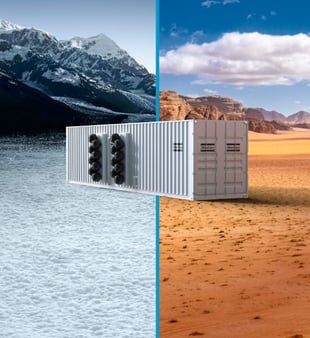
The Atlas Copco AIRCUBE houses the compressed air system in a custom enclosure, providing an outdoor installation option without requiring manufacturers to dedicate valuable indoor production space to the compressor room.
This can be particularly useful when expanding an existing facility where there is simply no room left inside.
A complete system, not a collection of components
A compressor is only one part of a complete compressed air system.
Depending on the application, the AIRCUBE can incorporate compressors, dryers, receivers, filtration, controls and monitoring into one coordinated package.
Compressor options include fixed-speed GA 11+–GA 90 models and GA 7 VSD+–GA 110 VSD+ variable speed drive options. Additional equipment can include dryers, receivers, filters, SMART monitoring and controllers such as Elektronikon® and SMARTLINK.
The container can also be configured with options such as fire protection, stainless-steel AIRnet piping, advanced filtration, insulation and automatic ventilation.
This integrated approach helps reduce the complexity of coordinating multiple pieces of equipment and installation activities at the customer site.
VSD technology can help manage energy costs
Adding capacity doesn't have to mean accepting unnecessary energy consumption.
For facilities with variable compressed air demand, a variable speed drive compressor can adjust output to better match production requirements. Instead of operating at a fixed speed regardless of demand, the compressor can vary its speed based on the system's needs.
The AIRCUBE can incorporate GA VSD+ compressors, allowing manufacturers to consider energy efficiency as part of the overall containerized system design.
The right compressor technology depends on the facility's load profile, operating conditions and production requirements. That's why system engineering matters.
The goal isn't simply to put a compressor inside a container. It's to engineer the right compressed air system for the application.
Built for outdoor environments
Putting a compressor outdoors introduces another consideration: the environment.
Temperature, dust and other site conditions can affect compressed air equipment and must be considered when designing an outdoor system.
The AIRCUBE is engineered for harsh climates, with options available to help address demanding environmental conditions.
Depending on the application, configurations can include insulation, automatic ventilation, fire protection and other environmental protections.
For facilities operating in challenging conditions, this allows the compressor room to be engineered around the environment rather than forcing the facility to build an indoor space simply to protect the equipment.
Flexibility when your facility changes
Manufacturing facilities don't always stay the same.
Production lines move. Buildings expand. Temporary projects become permanent. New facilities come online. Capacity requirements change.
A traditional compressor room is permanently tied to the building where it is constructed.
A containerized system can provide a different level of flexibility.
Because the compressed air system is packaged inside a container, it can be relocated as site requirements change. This makes containerized compressed air an option for facilities that need additional capacity today but want the flexibility to adapt tomorrow.
It can also provide a practical solution for temporary production expansions, remote operations or facilities where permanent construction isn't the preferred approach.
What should you consider before choosing a containerized system?
Not every compressed air application requires the same configuration. Before selecting an AIRCUBE, manufacturers should evaluate several factors.
-
What capacity and pressure do you need?
Consider both today's demand and your anticipated growth. A system should support current production while providing an appropriate path for future capacity.
-
What air quality is required?
Determine whether your application requires specific ISO 8573-1 air quality classes and identify the appropriate dryer and filtration package.
-
What environmental conditions will the system face?
Temperature, dust and other site conditions should be considered when engineering the container and its ventilation, insulation and protection options.
-
Would VSD technology benefit your load profile?
Variable demand may make a VSD compressor an attractive option for improving energy efficiency.
-
How will the system be monitored?
Remote monitoring and integration with existing plant controls can provide greater visibility into system performance. SMARTLINK can be incorporated.
These questions help ensure the container isn't simply large enough to house the equipment, it is engineered to support the actual production process.
The complete solution for compressed air capacity
Adding compressed air capacity doesn't have to mean building another compressor room.
The Atlas Copco Containerized Compressor Room provides a turnkey approach that combines compressed air equipment and supporting components in a factory-built package. With pre-wiring, pre-piping and multiple configuration options, the system is designed to simplify installation while reducing construction requirements.
For manufacturers looking to add capacity quickly, reduce total installed costs, preserve indoor floor space and maintain flexibility for future growth, a containerized compressor room can provide a compelling alternative to conventional installation.
The compressor room doesn't have to be inside your building. It can arrive ready to run.
Ready to add compressed air capacity without adding construction?
Talk to Atlas Copco about engineering an AIRCUBE configuration around your capacity, pressure, air quality, environmental and monitoring requirements.
FAQs



 5 min
5 min