

Why is hydrogen difficult to compress?
December 5, 2024
 5 min
5 min

Air naturally contains some moisture. Depending on where you are, there could be a high amount of moisture in the air (think Orlando, Florida or Houston, Texas) or very little moisture (think Death Valley, California). This moisture, also called humidity, can have drastic implications on your manufacturing processes when not properly regulated. It is important to make sure your compressed air is properly dried to achieve optimal results.
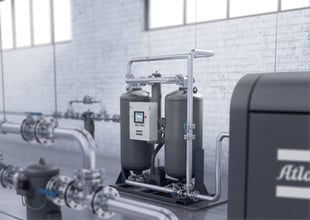
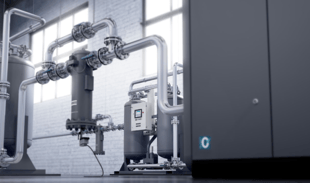
A heat of compression dryer is a type of regenerative desiccant dryer. These machines dry air through adsorption, a chemical process in which a highly porous material attracts and holds on to surrounding water molecules, effectively removing moisture from the air.
A compressor’s direct output stream is directed through the desiccant bed or into the drum. As the air passes through, the desiccant attracts and removes moisture through adsorption. The final pressure dew point (PDP) of the surrounding air can drop to as low as -50 degrees F. The desiccant is then regenerated (heated and dried) with hot air from the compressor for continuous use.
Traditional desiccant dryers regenerate their desiccant beds using either a portion of the already-dried compressed air, known as purge air, or an external electrical heating element. Both approaches consume additional energy on top of what the compressor itself uses, which adds to the overall operating cost of the compressed air system.
A heat of compression dryer takes a fundamentally different approach. Instead of using purge air or external heat to regenerate the desiccant, it captures and reuses the heat that is naturally generated during the compression process itself. This recovered heat, which can reach temperatures well above 300 degrees F in oil-free compressors, is directed through the saturated desiccant bed to drive off the captured moisture and restore the desiccant to full adsorption capacity.
Because the heat used for regeneration is recovered from the compression process rather than generated separately, a heat of compression dryer operates with significantly lower energy consumption than conventional heated or purge-air desiccant dryers. On most models, there is no purge air loss at all, meaning the full output of the compressor is available for use in the compressed air system. This combination of energy recovery and zero purge air loss is what makes the heat of compression dryer one of the most energy-efficient drying technologies available for compressed air systems today.
There are two models of compression dryers: single vessel and twin tower models. Both use the same basic process to achieve dry air, but differ in structure.
Single vessel dryers have two airstreams moving simultaneously through the desiccant bed: one with moist air moving from the air compressor to the desiccant to be dried and the other with hot air (sometimes with temperatures higher than 300 degrees F) to regenerate the saturated desiccant. Approximately three-quarters of the desiccant bed is devoted to drying the moist air while the remaining one-quarter is undergoing regeneration. The drum of the dryer rotates slowly (about 7 rotations per hour) to ensure that the desiccant is fully regenerated.
A twin tower model uses two desiccant beds to produce dry air. One tower captures moisture from the air using adsorption, while the other regenerates desiccant through a stream of hot air directly from the compressor. The towers periodically switch functions. Once a tower is regenerated, it begins capturing moisture from the air until the desiccant becomes saturated again. Many types of twin tower dryers require an extra amount of purge air to regenerate the desiccant, sometimes equaling 15-20 percent of the compressor’s rated capacity. However, heat of compression dryers use recovered heat from the compression process, saving energy and money.
Because of their ability to achieve very low pressure dew points and their energy-efficient use of recovered compression heat, heat of compression dryers are particularly well suited for applications and industries where both air quality and operating costs are critical considerations.
Industries that commonly rely on heat of compression dryers include pharmaceutical manufacturing, where very dry air is essential to protect product integrity and meet regulatory requirements; food and beverage production, where moisture in compressed air can cause contamination or spoilage; electronics manufacturing, where humidity can damage sensitive components during production; and chemical processing, where moisture in the air stream can interfere with reactions or degrade product quality.
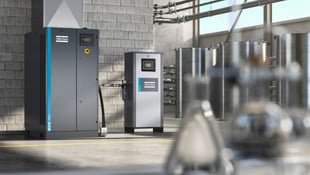
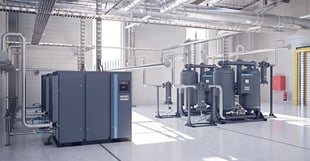
Heat of compression dryers are also a natural fit for facilities running oil-free compressors, which generate the high outlet temperatures needed for effective desiccant regeneration. When paired with an oil-free rotary screw or centrifugal compressor, a heat of compression dryer delivers a fully integrated, energy-efficient compressed air and drying system with no purge air loss and minimal additional energy input.
For facilities where energy efficiency is a top priority, the heat of compression dryer is one of the few drying technologies that actively contributes to overall system efficiency rather than adding to energy consumption.
With low installation and power costs and no purge air loss on most models, compression dryers are an economical buy for most users. Determining which heat of compression dryer is best for your compressed air system starts with understanding your compressed air needs. Whether you’re looking for energy savings and recovery, low PDP, or low lifecycle maintenance costs, compression dryers can provide the solution.
Frequently asked questions