Why is hydrogen difficult to compress?
December 5, 2024
 5 min
5 min

When it comes to compressed air quality, your dryer is one of the most critical components in your system. It protects downstream equipment, ensures product integrity, and keeps operations running efficiently. Yet, many facilities still rely on traditional beaded desiccant dryers, often without realizing the hidden costs tied to maintenance, energy use, and performance variability.
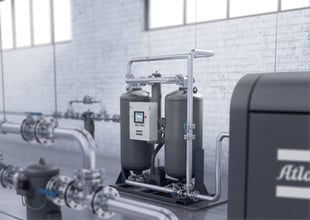
Atlas Copco’s CERADES technology is redefining what compressed air drying should look like. By replacing loose desiccant beads with a solid, structured design, CERADES eliminates common failure points and delivers consistent, long-term performance.
Beaded desiccant dryers have long been used to remove moisture from compressed air, but their design introduces challenges that become more apparent over time. The loose beads inside the dryer are constantly exposed to pressure swings and airflow during operation and regeneration cycles. This continuous movement causes the material to wear down.
As degradation occurs, several issues begin to impact system performance. Dust from broken beads can enter the air stream, increasing the risk of contamination. Airflow paths become uneven due to channeling, reducing drying efficiency. At the same time, pressure drop increases, forcing compressors to work harder and consume more energy.
Common challenges with traditional beaded desiccant dryers include:
While these dryers are effective initially, their performance often declines, leading to higher operating costs and more maintenance over time.
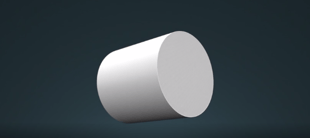
Atlas Copco’s CERADES technology solves these challenges by fundamentally changing the way desiccant works. Instead of loose beads, CERADES uses a patented solid, structured desiccant that remains fixed in place throughout operation.
This design eliminates friction and movement inside the dryer, which means the desiccant does not break down or produce dust. Air flows evenly through pre-determined pathways in the desiccant structure, eliminating resistance and maintaining consistent drying performance.
Key benefits of CERADES technology include:
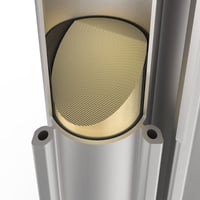
This structured approach allows CERADES dryers, such as the CD+5-30 and CD+20-335, to meet or exceed ISO air purity standards while delivering reliable performance over time.
Compressed air system reliability depends heavily on the performance of the dryer. When a dryer fails or underperforms, moisture can enter downstream equipment and cause corrosion, equipment damage, and inefficient operation of your compressed air system.
CERADES improves reliability by eliminating many of the failure points found in traditional dryers. Because the desiccant does not wear down, there is no risk of sudden performance drops or contamination from dust. The structured design ensures consistent airflow and stable operation, even under demanding conditions.
For industries where uptime is critical, this level of reliability supports smoother operations and reduces costly disruptions.
Energy efficiency is a major factor in compressed air system performance, yet it is often overlooked when evaluating dryers. Traditional desiccant dryers require purge air during regeneration, which means a portion of compressed air is lost and must be replaced, adding to energy costs.
CERADES technology minimizes this loss through a more efficient design. The structured desiccant allows for optimized regeneration, reducing the amount of purge air required. Additionally, the lower and more stable pressure drop reduces the workload on compressors.
Energy-saving advantages of CERADES include:
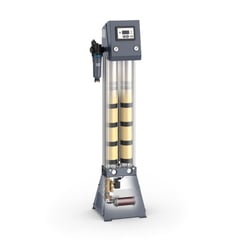
Over time, these improvements can lead to significant energy savings, especially in facilities where compressed air is a major utility.
Maintenance is one of the largest ongoing costs associated with compressed air systems. Traditional desiccant dryers require regular replacement of worn beads, along with cleaning and servicing to maintain performance.
CERADES eliminates much of this maintenance burden. Because the desiccant does not degrade, service intervals are extended and the need for replacement is significantly reduced. This not only lowers maintenance costs but also minimizes downtime associated with service events.
Facilities using CERADES benefit from:
By reducing both the frequency and complexity of maintenance, CERADES helps improve overall operational efficiency.
Choosing the right drying technology depends on your application, but for many modern facilities, the priorities are clear: reliability, efficiency, and consistent air quality.
CERADES is particularly well-suited for:
If your current dryer is driving frequent maintenance, rising energy costs, or inconsistent performance, upgrading to CERADES can provide a clear path to improvement.
If you’re experiencing frequent maintenance or desiccant replacement, rising energy costs, pressure drop issues or inconsistent air quality, it may be time to consider a new approach.
CERADES technology represents a shift toward smarter, more efficient compressed air systems, delivering long-term performance without compromise.